Buy art at www.brucehoulder.art and support Fighting Knife Crime London








By Ava Chowdhury-Turner, Prison Coach & Aspiring Barrister
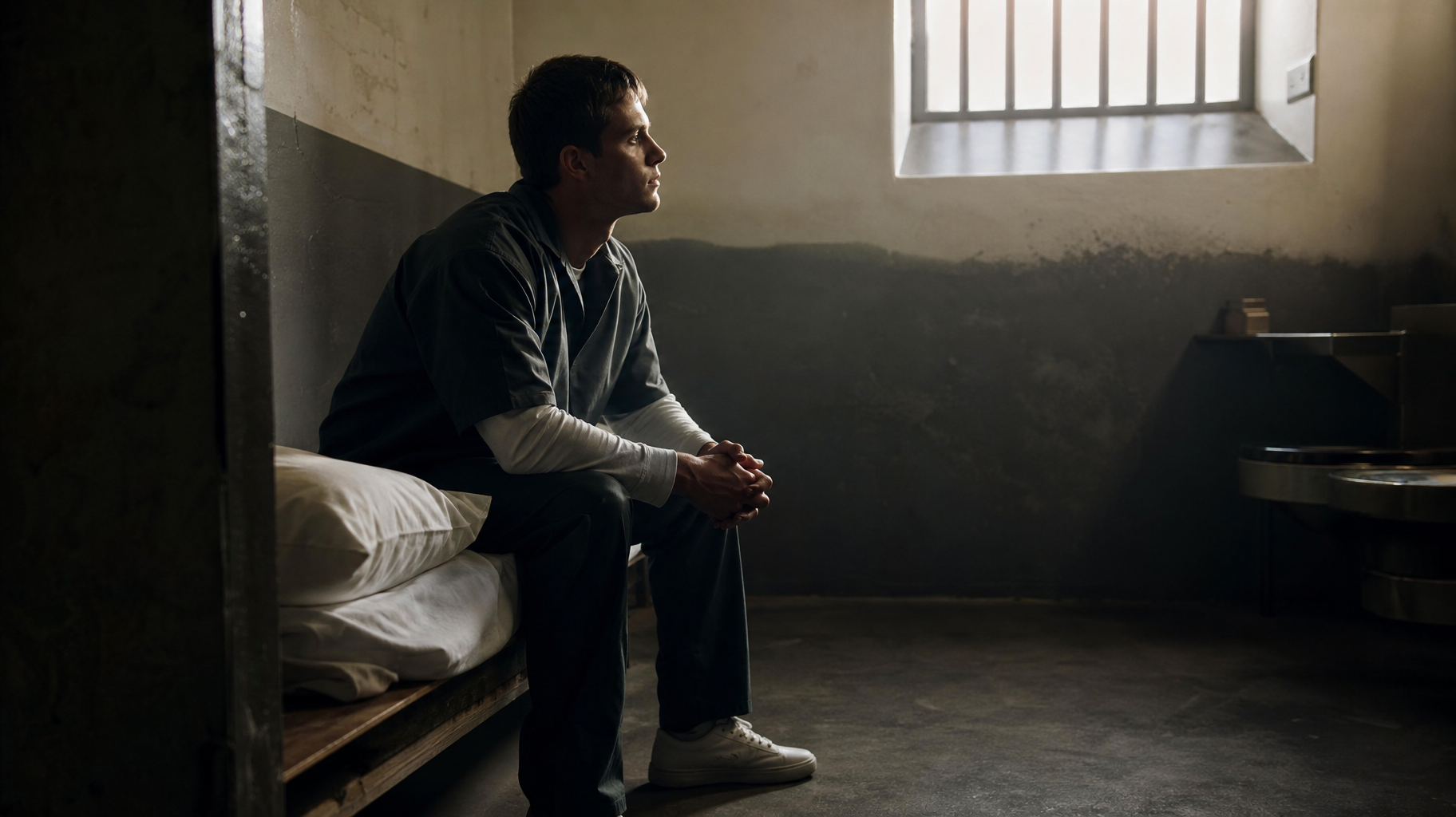
Introduction – the prison mental health crisis
Capacity is not the only crisis facing the prison system. According to the latest (2025) HMIP report, the majority of adult prisoners are experiencing some form of mental health problem. This comes as no surprise to those working in prisons or criminal justice (my professional role is to coach adult prisoners for the charity StandOut). What may be more surprising is how little we know about the full psychological profile of the prison estate, with the last comprehensive survey taking place in 1997. This paper makes the case for both a new research effort and further investment in evidence-based interventions to support prisoner wellbeing.
Whilst courses like StandOut have a genuine impact on the wellbeing of those able to access them, positive interventions to support prisoner wellbeing are few and far between. Waiting lists for talking therapies are often longer than their remaining custodial sentences. Meanwhile, conditions in prison do not help. According to HMP/YOI Pentonville’s most recent annual report: ‘many prisoners’ spend 22 hours a day behind cell doors. The last HMIP report states, "Depressingly”, that “time out of cell for prisoners has still not recovered” from the last COVID-19 lockdown.
The mental health of prisoners, particularly young adults, is key to understanding both offending and reoffending rates. However, prisoner mental health disorders also exist within the context of a more general decline in young people’s wellbeing, with referrals to mental health services reaching over one million in 2025 (approximately 1 in 10 children and almost double the 564,000 in 2018-19).
Youth mental health crisis: the bigger picture
Since 2010, there has been a sharp rise in young people in England reporting symptoms of mental distress. An analysis of the key drivers of this trend from the Youth Future Foundation (Pierce et al, 2025) points to the combination of poverty stresses with ‘reduced and unstable services for children and young people’. Funding for these services has been cut by 73% in real terms between 2010-11 and 2023-24, resulting in the closure of at least 1,243 council-run youth centres and the loss of over 4,500 youth worker jobs.
At the same time, despite increases in funding, a bottleneck in Child and Adolescent Mental Health Services (CAMHS) has caused a ‘treatment gap’, with only the most critical cases receiving support. Earlier intervention is hard to access, especially for some of the most disadvantaged groups who need it most. These include those experiencing Adverse Childhood Experiences (ACEs) and young people from ethnic minority backgrounds.
Asian and Black children were not only less likely to be referred to mental health services than their White peers, they were also referred later. As a result, 25% of Black children and 16% of Asian children were referred when in crisis (compared to 7.4% of White children). Conversely, minority groups are over-represented within prisons, comprising 27% of the prison population, compared to 18% of the general population. The reduced access to mental health support reduces the chance of a formal diagnosis, which in turn reduces the chance of support in custody - or even of being recognised by research focusing on those with diagnosed conditions, such as that of DHSC, above.
Social media adds further fuel to the youth mental illness fire.
Several recent studies point to the association between increased use of social media and higher levels of depression and anxiety, as well as some of the likely drivers of that association, including impacts on sleep and certain developmental pathways important in adolescence.
There is also evidence of behavioural contagion through the normalisation of harm viewed on social media. A 2024 Youth Endowment Fund study found that in the previous year, 70% of 13-17 year olds had seen real-world physical violence or weapon-carrying on social media over the previous year. Only 6% had actually searched for the content and 25% had it actively suggested and promoted to them. Strikingly, 39% admitted that viewing the content made them more likely to carry a weapon themselves, and 80% said it made them feel unsafe in their local area.
But, again, this digital landscape does not affect all young people equally. Online exposure to real-world violence disproportionately targets young people facing other risk factors including racial prejudice and neurodevelopmental vulnerabilities. Nationally, 77% of Black children and 74% of mixed-ethnicity children encounter violent online content compared to 69% of White peers. This exposure escalates drastically alongside neurodivergence and socio-environmental vulnerability: 77% of children with Special Educational Needs (SEN) see online violence (versus 67% without). Furthermore, eighty-nine percent of children suspected of a crime by police, and 94% of those approached to hold drugs, weapons, or money, had seen violent content online in the past year.
Social media does not, therefore, exist in isolation from offline trauma, but acts as a digital mirror and accelerator of factors which predispose real-world offending.
All of this means that young people who were already most at risk of contact with the criminal justice system are also most likely to have (often-undiagnosed) mental health issues and most likely to have those risk factors compounded by over-exposure to violent online content and social media as a whole. They are also the least likely to have been able to access support.
Where do we go from here?
The existing research into the youth mental health crisis provides a good starting point for understanding the mental health of prisoners (particularly young offenders). The above-identified drivers of the crisis build a picture of what could improve the mental health of young offenders too, i.e. increasing community support and tightening regulation of social media.
However, completing the picture of the needs and subsequent drivers of the prison population requires full and current data.
Why does all this matter?
Understanding and improving the mental health of the prison population is not only beneficial to the prisoners experiencing untreated mental health crises, but also to managing risk to society. Poor mental wellbeing in the population as a whole, especially among the young, is associated with both offending and reoffending.
One example of this is that increased anxiety is reflected in attitudes and behaviours related to knife crime. A 2025 Ben Kinsella Trust survey found that two thirds of young people surveyed harboured anxiety about knife crime. During my work supporting prisoners after release, I worked with a care-leaver with learning difficulties and complex mental health needs who asked me whether buying a stab-proof vest was legal, explaining his own wouldn’t work. When I asked why, he told me he had attempted to construct one out of books. Others take a more aggressive approach to self-defence, so that the pervasive anxiety results in normalising knife-carrying (Ben Kinsella Trust, 2025).
While the prison system cannot affect broader societal drivers of poor mental health, such as poverty, social media or reduced investment in youth and community centres, there may be more scope to intervene to improve the mental health of prisoners within prison and, thereby, reduce reoffending.
There is some evidence that programmes like StandOut can support prisoners to process emotions and invest time into bettering their confidence and overall wellbeing. Research and feedback from participants indicates that one of the biggest areas of impact we have is in mental health and wellbeing. As described, prison increases levels of trauma and considerable effort is made by StandOut coaches to build confidence, resilience and mental wellbeing in preparation for release.
StandOut measures changes in participants’ wellbeing using the internationally recognised Warwick-Edinburgh Mental Wellbeing Scale (WEMWBS) and 83% of participants have an increase of at least one point on this scale during the course. In feedback forms, 98% of participants reported increased confidence and 95% reported increased motivation following the course – key indicators of improved mental wellbeing.
Beyond the statistics, in my own experience I have witnessed significant changes in the men that we support, with participants demonstrating newfound confidence in areas like oracy (culminating in a public speech at their graduation), immense support for one another and expressing genuine hope for finding stability after release.
Conclusion
The prison estate is experiencing a mental health as well as a capacity problem.
To move beyond both will require more than back-end solutions such as building more under-staffed prisons or contradictorily releasing individuals early despite increasing sentence lengths.
Instead, we could intervene more effectively by investing in three areas: firstly, at the front-end of the prison system to reduce the risk of offending in the first place, through safer youth and community spaces and earlier access to mental health services for the highest-risk groups. Secondly, within prisons, we need more interventions designed to improve the wellbeing and personal development of prisoners in custody, with the aim of reducing reoffending.
Thirdly, however, to maximise the effectiveness of such solutions requires better evidential backing including the urgent need for an up-to-date national survey of prisoner mental health. I believe the valuable data this would capture should inform any future vision for solving the prison crisis.
Ava is a Prison coach at StandOut (https://www.standout.org.uk), and plans to work at the criminal Bar. She was Called to the Bar by Middle Temple earlier this year, having completed the Bar Practice Course with ICCA in 2025.
If you wish to do more research on these issues, Ava’s full full bibliography for the content of this article is below:
[1] Borschmann, R., Janca, E., Carter, A., Willoughby, M., Hughes, N., Snow, K., Stockings, E., Hill, N.T.M., Hocking, J., Love, A., Patton, G.C., Sawyer, S.M., Fazel, S., Puljević, C., Robinson, J. and Kinner, S.A. (2020) ‘The health of adolescents in detention: a global scoping review’, The Lancet Public Health, 5(2), pp. e114–e126. Available at: https://www.thelancet.com/journals/lanpub/article/PIIS2468-2667(19)30217-8/fulltext
[2] Children’s Commissioner for England (2026) Children’s and Young People’s Mental Health Services: 2024–25. London: Children’s Commissioner’s Office. Available at: https://www.childrenscommissioner.gov.uk/resource/childrens-and-young-peoples-mental-health-services-2024-25/
[3] Danechi, S. and Cooney, F. (2026) Prison population statistics. House of Commons Library Research Briefing, SN04334. London: House of Commons Library. Available at: https://researchbriefings.files.parliament.uk/documents/SN04334/SN04334.pdf
[4] Department of Health and Social Care (2025) The health of people in prison, on probation and in the secure NHS estate in England: Annual Report of the Chief Medical Officer. London: Department of Health and Social Care. Available at: https://assets.publishing.service.gov.uk/media/69c53add23fcbcd838a6f773/health-of-people-in-prison-on-probation-and-in-secure-nhs-estate-in-england-full-report.pdf
[5] Durcan, G., Saunders, A., Gadsby, B. and Hazard, A. / Centre for Mental Health (2023) Prison Mental Health Services in England, 2023. London: Centre for Mental Health. Available at: https://www.centreformentalhealth.org.uk/wp-content/uploads/2023/04/Prison-mental-health-services-in-England-2023.pdf
[6] Haylock, S., Boshari, T., Alexander, E.C., Kumar, A., Manikam, L. and Pinder, R. (2020) ‘Risk factors associated with knife-crime in United Kingdom among young people aged 10–24 years: a systematic review’, BMC Public Health, 20(1451), pp. 1–18. Available at: https://link.springer.com/article/10.1186/s12889-020-09498-4
[7] HM Chief Inspector of Prisons (2020) Segregation of men with mental health needs: A thematic review by HM Chief Inspector of Prisons. London: HM Inspectorate of Prisons. Available at: https://static1.squarespace.com/static/5b7ea2794cde7a79e7c00582/t/660b4cb1666c354078032a5a/1755622709513/Segregation-thematic-2024.pdf
[8] HM Chief Inspector of Prisons (2024) The long wait: A thematic review of delays in the transfer of mentally unwell prisoners. London: HM Inspectorate of Prisons. Available at: https://cdn.websitebuilder.service.justice.gov.uk/uploads/sites/19/2024/02/The-long-wait-web-2024.pdf
[9] HM Chief Inspector of Prisons (2026) Annual Report 2025–26. HC 432. London: HM Inspectorate of Prisons. Available at: https://cdn.websitebuilder.service.justice.gov.uk/uploads/sites/19/2026/07/HMI-Prisons-ARA-25-26-FINAL.pdf
[10] Ministry of Justice (2026) Cross-Government Neurodiversity Action Plan: Final progress update. London: GOV.UK. Available at: https://assets.publishing.service.gov.uk/media/69830f2420fe1bb69ac243af/neurodiversity-action-plan-final-update.pdf
[11] House of Commons Library (2018) Mental health in prisons. Research Briefing. London: House of Commons Library. Available at: https://researchbriefings.files.parliament.uk/documents/CDP-2017-0266/CDP-2017-0266.pdf
[12] House of Commons Library (2025) Parliamentary briefing on social media restrictions for children. London: House of Commons Library. Available at: https://researchbriefings.files.parliament.uk/documents/CBP-10468/CBP-10468.pdf
[13] Howard League for Penal Reform / Lord Burnett of Maldon (2026) Sentence Inflation, its causes and consequences for prisons, rehabilitation and public finances. Howard League Blog (Neill Law Lecture). London: The Howard League for Penal Reform. Available at: https://howardleague.org/blog/sentence-inflation-its-causes-and-consequences-for-prisons-rehabilitation-and-public-finances/
[14] National Audit Office (2017) Mental health in prisons. HC 42, Session 2017–2019. London: National Audit Office. Available at: https://www.nao.org.uk/wp-content/uploads/2017/06/Mental-health-in-prisons.pdf
[15] Newcastle University (2018) Reduction in psychiatric beds associated with rise in prison numbers. Newcastle: Newcastle University Press Release. Available at: https://www.ncl.ac.uk/press/articles/archive/2021/11/prisonnumbers/
[16] Ofcom (2026) Children’s Online Experiences Research Report. London: Ofcom. Available at: https://www.ofcom.org.uk/siteassets/resources/documents/online-safety/research-statistics-and-data/protecting-children/childrens-online-experiences-research-report.pdf?v=418198
[17] Office for National Statistics (1998) Psychiatric morbidity among prisoners in England and Wales: Summary report. London: The Stationery Office. Available at: https://www.researchgate.net/publication/10762020_Psychiatric_Morbidity_Among_Prisoners_in_England_and_Wales
[18] Prison Advice and Care Trust (Pact) and Centre for Mental Health (2025) Mental Health in Prisons: Crisis and Opportunity. London: Pact & Centre for Mental Health. Available at: https://www.prisonadvice.org.uk/media/exjhcwhz/mental-health-in-prisons-crisis-and-opportunity.pdf
[19] Prison Reform Trust (2021) Prison Reform Trust response to the Justice Committee inquiry on mental health in prisons. London: Prison Reform Trust. Available at: https://prisonreformtrust.org.uk/wp-content/uploads/old_files/Documents/Consultation%20responses/Mental%20health%20justice%20committee%20inquiry%20PRT%20evidence.pdf
[20] Prison Reform Trust & Centre for Mental Health (2017) Self-harm and suicide rising as prisons struggle to meet mental health need. London: Prison Reform Trust. Available at: https://prisonreformtrust.org.uk/self-harm-and-suicide-rising-as-prisons-struggle-to-meet-mental-health-need/
[21] PLOS ONE / BrainWaves Study Group (2025) ‘The BrainWaves study of adolescent wellbeing and mental health: Methods development and pilot data’, PLOS ONE. Available at: https://journals.plos.org/plosone/article?id=10.1371/journal.pone.0338009
[22] StandOut (2025) StandOut Annual Report 2024–25. London: StandOut Charitable Trust. Available at: https://static1.squarespace.com/static/5bd1c22652395821ba11b05d/t/6909e9ce15464d680a3b1824/1762257362072/StandOut+Annual+Report+2024-25.pdf
[23] StandOut Internal Data (2026).
[24] Turner, E.J. and Brahams, D. (2025) ‘Knife crime in adolescents in the United Kingdom’, Medico-Legal Journal, 93(3), pp. 115–117. Available at: https://journals.sagepub.comdoi/10.1177/00258172251348305
[25] UK Parliament (2025) Knife Crime: Children and Young People. Hansard Parliamentary Debates, House of Commons, Vol. 764, 20 March 2025. London: UK Parliament. Available at: https://hansard.parliament.uk/commons/2025-03-20/debates/E8E0359F-BC0E-45A8-9399-8CAA6877D774/KnifeCrimeChildrenAndYoungPeople
[26] Youth Endowment Fund (2024) Children, Violence and Vulnerability 2024: Social Media and Violence. London: Youth Endowment Fund. Available at: https://youthendowmentfund.org.uk/reports/children-violence-and-vulnerability-2024/
[27] Youth Endowment Fund (2025) Sharing Power: Peer Action Collective (PAC) Research Report. London: Youth Endowment Fund. Available at: https://youthendowmentfund.org.uk/wp-content/uploads/2025/10/PAC-A4-REPORT-V4-ACCESSIBLE.pdf
[28] Youth Futures Foundation (2025) Understanding drivers of recent trends in young people’s mental health. London: Youth Futures Foundation. Available at: https://youthfuturesfoundation.org/publication/report-understanding-drivers-of-recent-trends-in-young-peoples-mental-health/